Updated on 9 November 2026 by Nicolas Finet, CEO of Sortlist. This guide has been rewritten for 2026: it defines hybrid events, summarises what organisers report about demand, explains the formats and platforms available, covers accessibility, data protection and costs, and gives a planning checklist.
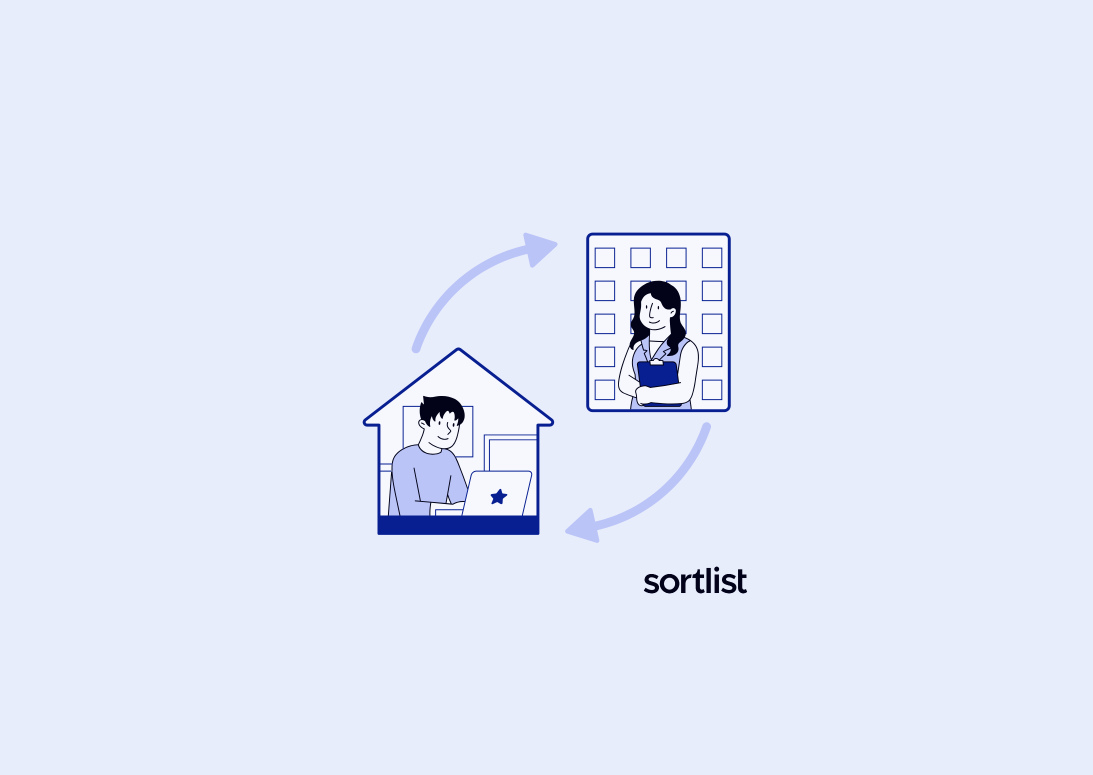
A hybrid event combines an in-person audience with a remote one, connected through technology. It is not a live event with a webcam: the best hybrid events are designed for both audiences from the start. This guide covers what a hybrid event is, when to choose one, and how to run it well.
Key takeaways
- A hybrid event gives in-person and remote attendees equal opportunities to learn, interact and network. It needs two audience experiences, not one with a stream attached.
- Industry reports in 2026 say about 87% of enterprise event planners will keep offering hybrid options for major conferences, and a hybrid event's digital audience typically outnumbers the room several times over.
- Budget for production, platform, moderation and accessibility, and comply with UK GDPR when you collect attendee data and record sessions.
Defining hybrid events: physical and virtual together
A hybrid event has a live, in-person component at a venue and a virtual component that remote participants join online. Both audiences can follow sessions, ask questions and take part in polls. A well-designed hybrid event also lets them connect with each other.
| Format | Audience | Best for |
|---|---|---|
| In-person | Local, on-site | Networking, hospitality, hands-on experiences |
| Virtual | Online only | Wide reach, low cost, webinars |
| Hybrid | Both, connected | Conferences, product launches, training, AGMs |
Why choose hybrid? Industry commentary points to several reasons: attendees have different preferences and travel constraints, and offering a virtual option alongside the physical event can significantly expand audience size and inclusivity.
“Attendees have diverse preferences and sometimes face travel constraints, so offering a virtual attendance option alongside the physical event can significantly expand audience size and inclusivity.”
Event Planner, Event industry trends for 2026
When a hybrid event makes sense
- Your audience is geographically dispersed.
- Content has value beyond the room, such as keynotes and training.
- You want recorded content for later use.
- You need inclusion for people who cannot travel.
- Sponsors want wider reach.
It is less suited to small, highly interactive workshops or events built around hospitality and face-to-face networking, where a stream can distract from the in-room experience.
Designing for two audiences
Equal opportunities to engage
- Run live polls and Q&A through the same app, so both audiences participate. Industry surveys report that a large majority of virtual event organisers use live polling to keep participants involved.
- Appoint a moderator for the virtual audience to bring their questions into the room.
- Use shared networking features such as chat, matchmaking and meeting booking.
Content and pacing
- Keep virtual sessions shorter, with breaks, since screen attention is limited.
- Produce for camera: lighting, sound and slides legible on small screens.
- Consider separate content tracks, such as workshops for the remote audience.
Networking
Networking is the hardest part. Use app-based introductions, topic rooms, virtual meeting tables and facilitated sessions where on-site and remote attendees talk to each other.
Technology and tools
| Need | What to look for |
|---|---|
| Event platform | Registration, streaming, chat, Q&A, polls, networking, analytics. Options include enterprise suites (Cvent, Bizzabo) and virtual and hybrid platforms such as RingCentral Events (formerly Hopin) |
| Streaming and production | Cameras, audio, switching, encoders and a reliable connection, ideally with a backup |
| Engagement tools | Live polls, word clouds, quizzes and moderated Q&A |
| Captioning and translation | Live captions and, where useful, translation |
| Analytics | Attendance, session views, engagement and lead capture |
Pricing varies widely. Enterprise tools such as Cvent are quote-based and need implementation work, which suits organisations that run many events. Some tools publish prices, with hybrid and onsite plans from about $199 per organiser per month (billed annually) in one 2026 comparison. Compare features against your needs, and see AI tools for event planning.
Accessibility and inclusion
- Captions: provide live captions for sessions, and edited captions for recordings.
- Translation: consider live translation or multilingual sessions for international audiences. AI translation tools are improving, but check accuracy for important content.
- Platform accessibility: choose tools that work with screen readers and keyboard navigation.
- Venue accessibility: step-free access, hearing loops and quiet spaces.
- Clear information: publish how to join and what support is available.
The Equality Act 2010 requires reasonable adjustments for service users, which includes event attendees.
Data privacy and security
- Lawful basis and transparency: tell attendees what data you collect and how it is used, including recording and sharing with sponsors.
- Consent for marketing: collect separate consent for marketing messages and sponsor contact.
- Recording: inform attendees and speakers, and agree rights with speakers.
- Security: use authenticated access, secure links and trusted platforms, and check where data is stored.
- Retention: delete data when it is no longer needed.
This is general information, not legal advice. See event management for broader legal and safety duties, including Martyn's Law for larger venues.
What does a hybrid event cost?
A hybrid event costs more than either format alone, because you pay for a venue and for production, streaming and platform. Main cost areas:
- Venue and catering for the in-person audience.
- Production: cameras, audio, switching, streaming crew, internet capacity and backup.
- Platform licence and support.
- Moderators and hosts for virtual audiences.
- Captioning and translation.
- Marketing to both audiences.
Offset costs with virtual ticket revenue, sponsorship (virtual sponsor packages), on-demand content and reuse of recordings. See corporate event budgeting for a framework.
Measuring success
- Registrations and attendance, split by in-person and virtual.
- Session engagement: watch time, questions, poll participation.
- Networking activity: meetings, messages and connections.
- Satisfaction scores and Net Promoter Score for both audiences.
- Leads, sponsor satisfaction and on-demand views afterwards.
- Cost per attendee and return on investment.
Hybrid event checklist
- Define objectives for each audience.
- Choose a venue with strong connectivity and space for production.
- Select the platform and test it with your content.
- Plan the programme for screen and room.
- Arrange captioning, accessibility and data protection.
- Rehearse with speakers, moderators and technicians.
- Prepare backup internet, power and a contingency plan.
- Promote to both audiences with clear joining instructions.
- Collect feedback and publish on-demand content.
Frequently asked questions about hybrid events
What is a hybrid event?
An event with an in-person audience and a remote online audience, both able to participate.
Are hybrid events still popular?
Industry reports in 2026 say a large share of enterprise planners (87% in one survey) will keep offering hybrid options for major conferences.
Are hybrid events more expensive?
Usually yes, because you fund venue and production, but virtual tickets, sponsorship and on-demand content can offset some of the cost.
How do I engage a virtual audience?
Use moderated Q&A, polls, chat, short sessions and virtual networking, with a dedicated host for online attendees.
What platform should I use?
It depends on scale and budget. Compare enterprise suites and hybrid event platforms on features, support, accessibility and cost.
What are the data protection rules?
Under UK GDPR, be transparent about data use and recording, get consent for marketing and protect attendee data.
Planning a hybrid event? Post your project on Sortlist and compare UK event agencies for free.
Sources: Gass Productions, hybrid event statistics 2026, Event Planner, 2026 trends, EventsAir, hybrid event software, SpotSaaS, hybrid event platforms. Survey figures and prices are as reported; this is not legal advice.